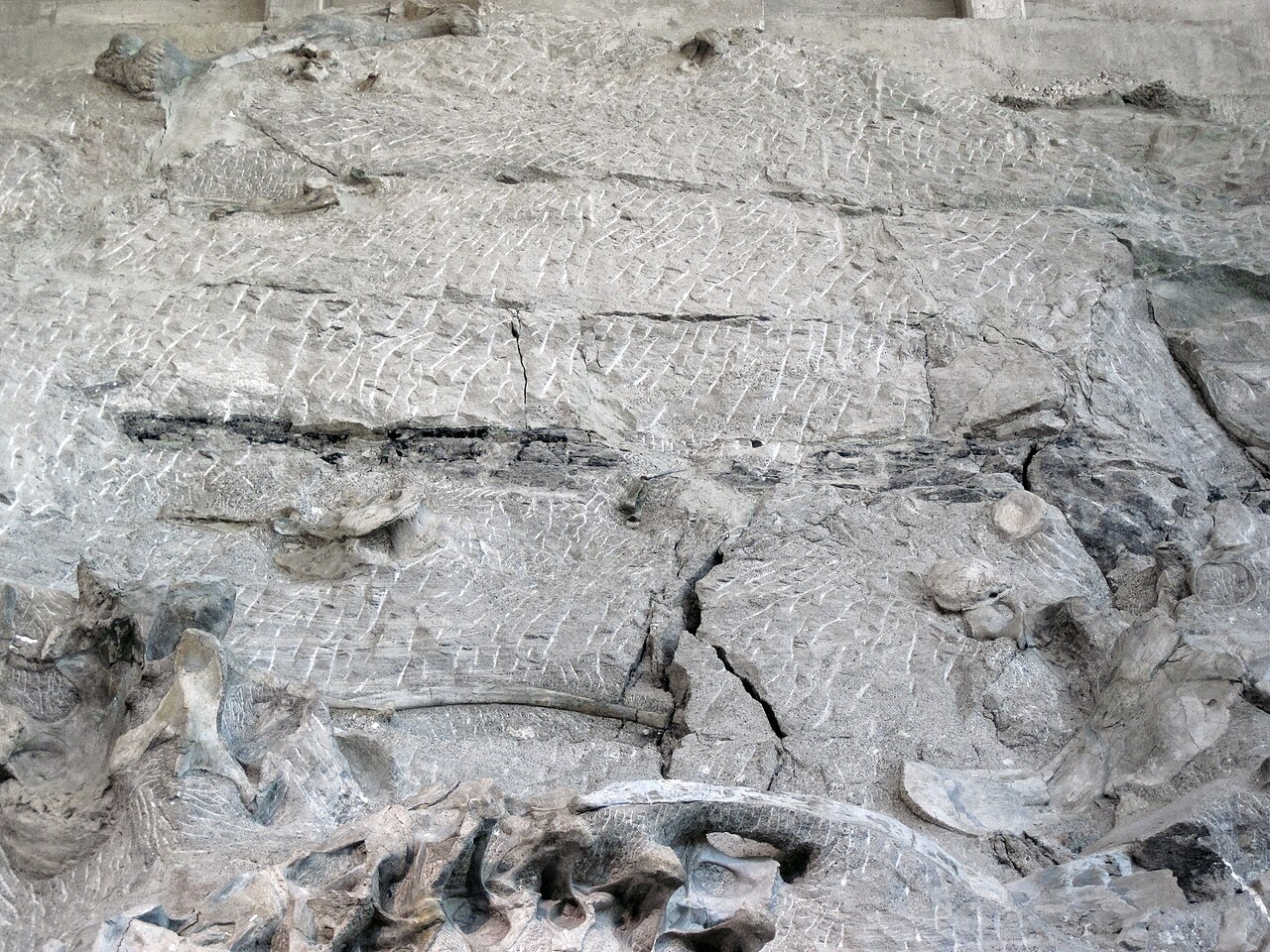
When Charles Darwin reflected upon the imperfections of the geological record in On the Origin of Species, he famously described it as a history of the world imperfectly kept, written in a changing dialect, and of which we possess but a few pages of a single volume. What Darwin was describing is the core discipline of modern taphonomy — the science of how living organisms transition from the biosphere into the lithosphere. Coined in 1940 by Soviet paleontologist Ivan Efremov from the Greek words taphos (burial) and nomos (law), taphonomy encompasses every physical, chemical, and biological process that affects an organic body from the moment of clinical death to its eventual discovery by a paleontologist’s chisel millions of years later.
Executive Takeaway: The Taphonomic Funnel
Taphonomy is divided into two sequential realms: Biostratinomy (processes occurring between death and initial sedimentary burial, such as scavenging, decomposition, weathering, and hydraulic transport) and Diagenesis (chemical and physical processes occurring after burial, including compaction, groundwater mineralization, recrystallization, and lithification). Understanding these processes prevents scientists from mistaking post-mortem geological distortion for genuine biological anatomy.
Phase 1: Biostratinomy — The Chaos Above the Sediment
The journey of fossilization begins with necrolysis — the death of the organism. Immediately upon cessation of metabolic life, biological decay mechanisms activate. Endogenous digestive enzymes begin autolysis, breaking down cell membranes, while trillions of opportunistic gut bacteria multiply and consume the host’s soft organs.
During the biostratinomic interval, an exposed carcass must navigate a gauntlet of destructive physical and biological filters:
| Biostratinomic Stage | Physical / Biological Agent | Observable Taphonomic Signature |
|---|---|---|
| Necrolysis & Scavenging | Carnivores, vultures, insects, microbial decay | Bone crushing, puncture marks, disarticulation of limbs |
| Atmospheric Weathering | Solar UV radiation, freeze-thaw cycles, desiccation | Concentric bone cracking, surface flaking (Behrensmeyer stages 0–5) |
| Hydraulic Transport | River currents, tidal surges, alluvial floods | Abrasion of bone edges, alignment of long bones with stream current (orientational flow) |
| Bioerosion | Wood-boring mollusks, osteophagous worms, algal borings | Microscopic tunneling in bone cortex, boring holes in marine shells |
Voorhies Groups and Hydraulic Winnowing
When floodwaters sweep a vertebrate skeleton into an active river system, the bones do not travel together as a cohesive unit. In 1969, paleontologist Michael Voorhies established that different skeletal elements possess distinct hydraulic densities:
- Voorhies Group I (Immediate Flotation/Transport): Ribs, vertebrae, sternal plates, and clavicles — lightweight, low-density elements that wash miles downstream in low-velocity currents.
- Voorhies Group II (Gradual Saltation/Rolling): Long limb bones (femora, humeri, tibiae) and pelvic girdles that roll along the river bed during intermediate flood surges.
- Voorhies Group III (Lag Deposits): Heavy skulls, mandibles, and dense teeth that resist water movement, remaining as heavy anchor stones in river channel gravels.
Understanding Voorhies sorting prevents paleontologists from mistakenly assuming that an ancient quarry containing only skulls and teeth represents a ceremonial graveyard; in reality, it is simply the hydraulic consequence of river current physics.
Phase 2: Diagenesis — The Subterranean Geological Pressure Cooker
Once an organism survives the biostratinomic gauntlet and is safely sealed beneath fine sediment, it enters the second great taphonomic realm: Diagenesis. Diagenesis encompasses all chemical, physical, and biological changes that take place within sedimentary rock after deposition, excluding high-grade metamorphic melting.
1. Compaction and Tectonic Plastic Deformation
As thousands of feet of overlying sedimentary layers accumulate over millions of years, hydrostatic and lithostatic pressure escalates dramatically. The volume of porous mud is reduced by up to 70 percent as pore water is squeezed out. Fragile, hollow bones — such as pterosaur wings or delicate bird skulls — are crushed flat like pancakes along the horizontal bedding planes. In tectonic fold belts, horizontal compressive stress can plastically deform fossils, stretching a circular ammonite into an oval or shearing a trilobite into an elongated polygon. Paleontologists must apply mathematical retro-deformation formulas to reconstruct the animal’s true living geometry.
2. Groundwater Hydrochemistry and Mineral Substitution
Subterranean groundwaters are active chemical solutions containing dissolved ions, organic acids, and dissolved gases. Depending on the pH, oxidation-reduction potential (Eh), and temperature of the diagenetic pore fluids, minerals dissolve or precipitate:
- Neomorphism: The transformation of aragonite (the thermodynamically unstable crystal polymorph of calcium carbonate that forms modern mollusk shells) into stable calcite, often obliterating internal microscopic shell microstructure.
- Silicification: Replacement of biological carbonate or bone hydroxyapatite by microcrystalline quartz or chalcedony.
- Pyritization: Precipitation of iron disulfide under strict marine euxinic conditions, turning delicate soft-bodied tissues into sparkling brassy pyrite.
Taphonomic Modes: Reading the Quality of the Rock Record
Modern taphonomists categorize fossil deposits into specific “taphofacies” that diagnose ancient depositional environments:
A fossil bed packed with fragmented, abraded, round-edged bone pebbles indicates high-energy surf zone turbulence or protracted river channel reworking. Conversely, an articulated dinosaur skeleton found in an arcuate “death pose” (opisthotonic posture with head and neck curved backward over the spine) buried in unbioturbated silt signifies rapid suffocating burial in a dust storm, flash mudslide, or volcanic ash fall — preserving a snapshot of an animal in its final death throes.
Forensic Paleontology: Distinguishing Scavenging from Predation
Taphonomic forensic analysis allows modern scientists to reconstruct crime scenes 70 million years after the fact. By examining the microscopic geometry of bone damage under scanning electron microscopes, researchers distinguish between:
- Theropod Bite Marks: Deep, parallel gouges with serration drag tracks and crushing punctures produced by tooth crowns.
- Crocodilian Death Rolls: Spiral torsional bone fractures and conical, rounded puncture pits.
- Dermestid Beetle Borings: Intricate, cylindrical star-shaped feeding tunnels carved into dry bone surfaces by scavenging beetle larvae, indicating the carcass lay exposed and mummified in the open sun for weeks before burial.
Conclusion: The Taphonomic Filter as a Source of Scientific Truth
Far from being merely an annoying obstacle that degrades biological evidence, taphonomy is an extraordinary source of scientific insight. Every scratch on a fossil bone, every mineral crystal within a cellular void, and every missing limb element tells a rich geological story of currents, chemistry, climate, and ecology. Taphonomy bridges the chasm between life and death, transforming the silent stone of the earth into an eloquent historical testimony of the living world.