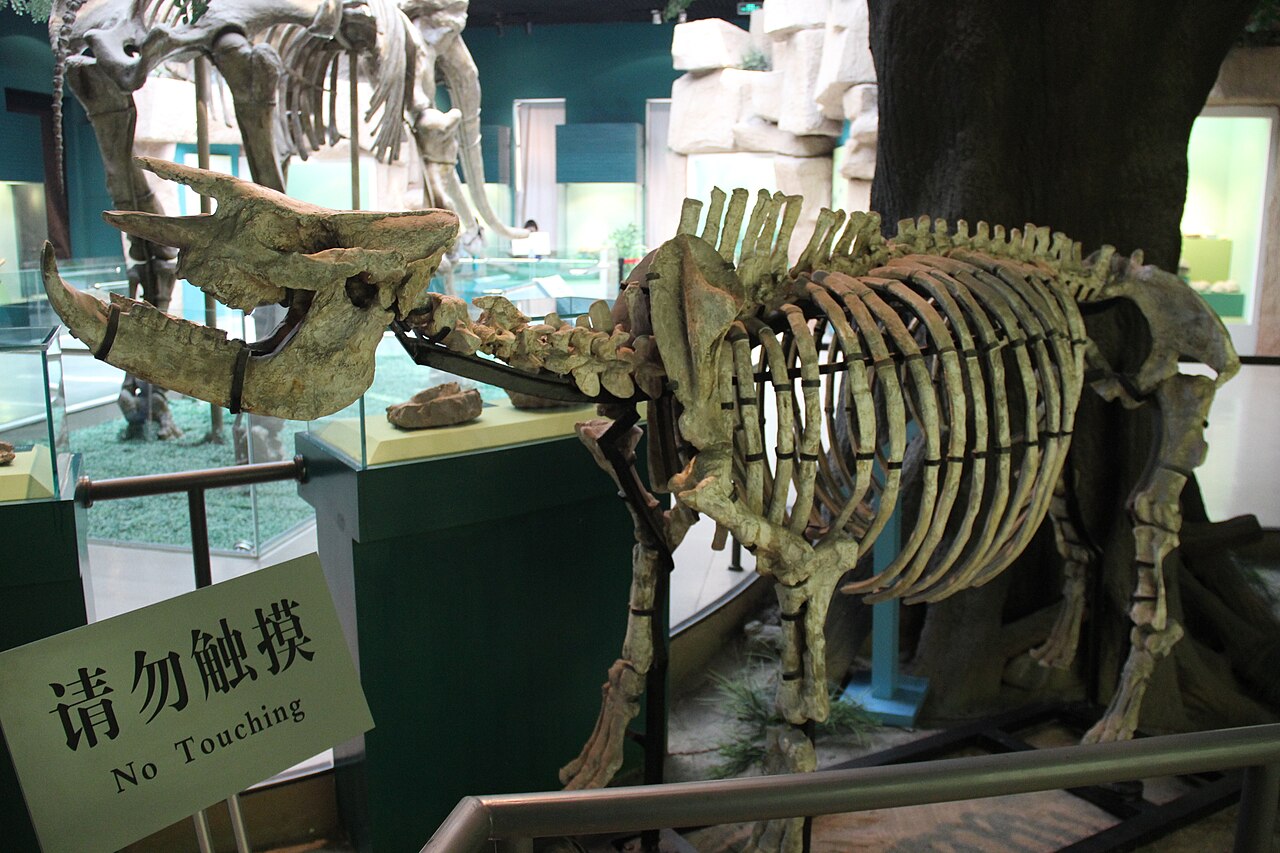
When the Chicxulub asteroid obliterated non-avian dinosaurs 66 million years ago, it abruptly terminated the Mesozoic Era and initiated the third great chapter of complex terrestrial life: the Cenozoic Era — the Age of Mammals. Spanning from the Cretaceous-Paleogene extinction boundary to the modern day, the Cenozoic is our geological home. Across its 66-million-year arc, the Earth transformed from a steamy, ice-free greenhouse planet blanketed in subtropical palm forests from the equator to the poles into a dynamic, glaciated icehouse world governed by vast polar ice sheets, sprawling grassland biomes, and the evolutionary rise of hominids. By tracing the Cenozoic from the explosive Paleocene-Eocene Thermal Maximum (PETM) to the Pleistocene Ice Ages, paleontology reveals the deep climatic and biological forces that forged the modern world.
Executive Takeaway: The Modern World in the Making
The Cenozoic Era is structurally organized into the Paleogene (Paleocene, Eocene, Oligocene), Neogene (Miocene, Pliocene), and Quaternary (Pleistocene, Holocene) periods. It witnessed the explosive radiation of placental mammals into vacant dinosaurian niches, the tectonic birth of the Alps and Himalayas, the transition from greenhouse to icehouse climates, and the evolutionary emergence of the genus Homo.
The Paleocene Dawn: Radiation in the Ashes
In the immediate aftermath of the K-Pg extinction, surviving mammals were tiny, nocturnal insectivores and omnivores measuring barely larger than rats and tree shrews. However, with giant theropods gone and herbivorous dinosaurs eliminated, a colossal ecological vacuum opened.
Within a few million years during the Paleocene Epoch (66 – 56 Ma), mammals underwent one of the most explosive evolutionary radiations in vertebrate history. Primitive archaic ungulates (condylarths), pantodonts (such as the cow-sized Coryphodon), and early primates appeared. Yet in the Early Paleocene, mammals were not yet the apex predators; large flightless “terror birds” (Phorusrhacidae) and giant ancient snakes like Titanoboa cerrejonensis — a 42-foot boid that hunted in 90°F equatorial Colombian swamps — temporarily ruled terrestrial food chains.
| Cenozoic Epoch | Geological Duration | Planetary Climate Regime | Key Biological Innovations |
|---|---|---|---|
| Paleocene | 66.0 – 56.0 Ma | Rapidly warming post-impact world | Explosive radiation of placental mammals; Titanoboa |
| Eocene | 56.0 – 33.9 Ma | Hyperthermal greenhouse (PETM); palm trees in Arctic | Dawn of modern orders: Perissodactyla, Artiodactyla, Cetacea, Primates |
| Oligocene | 33.9 – 23.0 Ma | Onset of Antarctic glaciation; cooling & drying | Paraceratherium; open woodland/shrubland expansion |
| Miocene | 23.0 – 5.3 Ma | Warm re-surge followed by global aridification | Global C4 grassland explosion; hominid-ape divergence |
| Pliocene | 5.3 – 2.58 Ma | Moderate cooling; closure of Isthmus of Panama | Great American Biotic Interchange (GABI); Australopithecus |
| Pleistocene | 2.58 Ma – 11.7 ka | Cyclic continental glaciations (Ice Ages) | Mammoths, Smilodon, megafauna; emergence of Homo sapiens |
The Eocene Greenhouse and the PETM Event
Approximately 56 million years ago, the boundary between the Paleocene and Eocene was marked by the Paleocene-Eocene Thermal Maximum (PETM) — the most extreme, rapid global warming event of the Cenozoic. Over an interval of barely 5,000 years, an enormous release of methane clathrates and volcanic carbon drove global temperatures upward by 5°C to 8°C.
Tropical rainforests expanded all the way to the Arctic Circle. Paleontologists working on Ellesmere Island in the Canadian Arctic have unearthed fossilized tapirs, alligators, giant tortoises, and dawn redwood forests that flourished in warm, temperate 24-hour polar daylight. The PETM served as an evolutionary incubator: during this hyperthermal spike, modern mammalian orders — Artiodactyla (even-toed ungulates), Perissodactyla (odd-toed ungulates), and true Euprimates — dispersed across interconnected high-latitude land bridges to colonize the northern continents.
The Return to the Sea: Cetacean Evolution
During the warm Eocene, one of the most stunning evolutionary journeys in vertebrate history occurred: the transition of terrestrial artiodactyls into marine whales. From four-legged walking ancestors like Pakicetus in freshwater streams of Pakistan, evolution sculpted semi-aquatic forms like Ambulocetus (“the walking whale”), followed by fully aquatic oceanic giants like Basilosaurus, which reached 60 feet in length while still retaining vestigial, useless hind legs — an undeniable evolutionary link connecting terrestrial mammals to modern blue whales.
The Oligocene and Miocene: The Rise of Grasslands
Approximately 34 million years ago, the Eocene-Oligocene boundary plunged the Earth into a permanent cooling trajectory. Tectonic movement separated South America and Australia from Antarctica, opening the Drake Passage. This permitted the birth of the Antarctic Circumpolar Current, thermally isolating Antarctica and locking the continent beneath permanent continental ice sheets for the first time.
As the planet cooled and dried, dense tropical forests retreated globally, replaced by vast, open grasslands and savannas. Grass is a brutal, abrasive food source rich in hard microscopic silica grains (phytoliths) that wear mammalian teeth down to the gum line. In response, mammalian herbivores underwent a revolution in dental morphometrics: evolving hypsodont (extremely high-crowned) grinding molars with complex enamel folds capable of withstanding decades of silica abrasion. Horses evolved from small, four-toed forest browsers (Hyracotherium) into large, single-toed cursorial grazers (Equus) adapted for sprinting across hard savannah plains.
The Quaternary Ice Ages: Pleistocene Megafauna and Human Dawn
Approximately 2.58 million years ago, the Quaternary Period commenced with the expansion of massive continental ice sheets across North America (the Laurentide Ice Sheet) and northern Eurasia. Driven by subtle, cyclic wobbles in Earth’s orbital tilt, precession, and eccentricity (Milankovitch cycles), the Pleistocene oscillated through dozens of glacial maximums and warm interglacials.
This epoch gave rise to the celebrated Pleistocene Megafauna: woolly mammoths, mastodons, woolly rhinoceroses, giant ground sloths (Megatherium), saber-toothed cats (Smilodon), dire wolves, and giant short-faced bears. Amid these glacial steppes, hominid evolution surged: from Australopithecus in Pliocene East Africa to tool-using Homo erectus, cold-adapted Neanderthals (Homo neanderthalensis), and anatomically modern Homo sapiens.
Conclusion: The Anthropocene Horizon
The Cenozoic Era is not a distant, finished museum diorama; it is the living world we inhabit today. The continental layouts, the global ocean currents, the grasses that feed our global agricultural systems, and our own biological species are the direct culmination of Cenozoic evolutionary history. By understanding the deep climatic upheavals, extinction recoveries, and anatomical transformations of the Cenozoic, humanity reads the master blueprint of its own biological origin and gains the indispensable historical knowledge required to steward the future of our living Earth.