Fossil Types Dinosaurs Prehistoric Mammals Fossil Formation Geological Eras About Us Contact Us
📘 SUBJECT ARCHIVE

Subject Guides

Explore structured study guides, course summaries, and learning resources.

Mammoths vs Mastodons Differences in Teeth, Diet, and Habitat
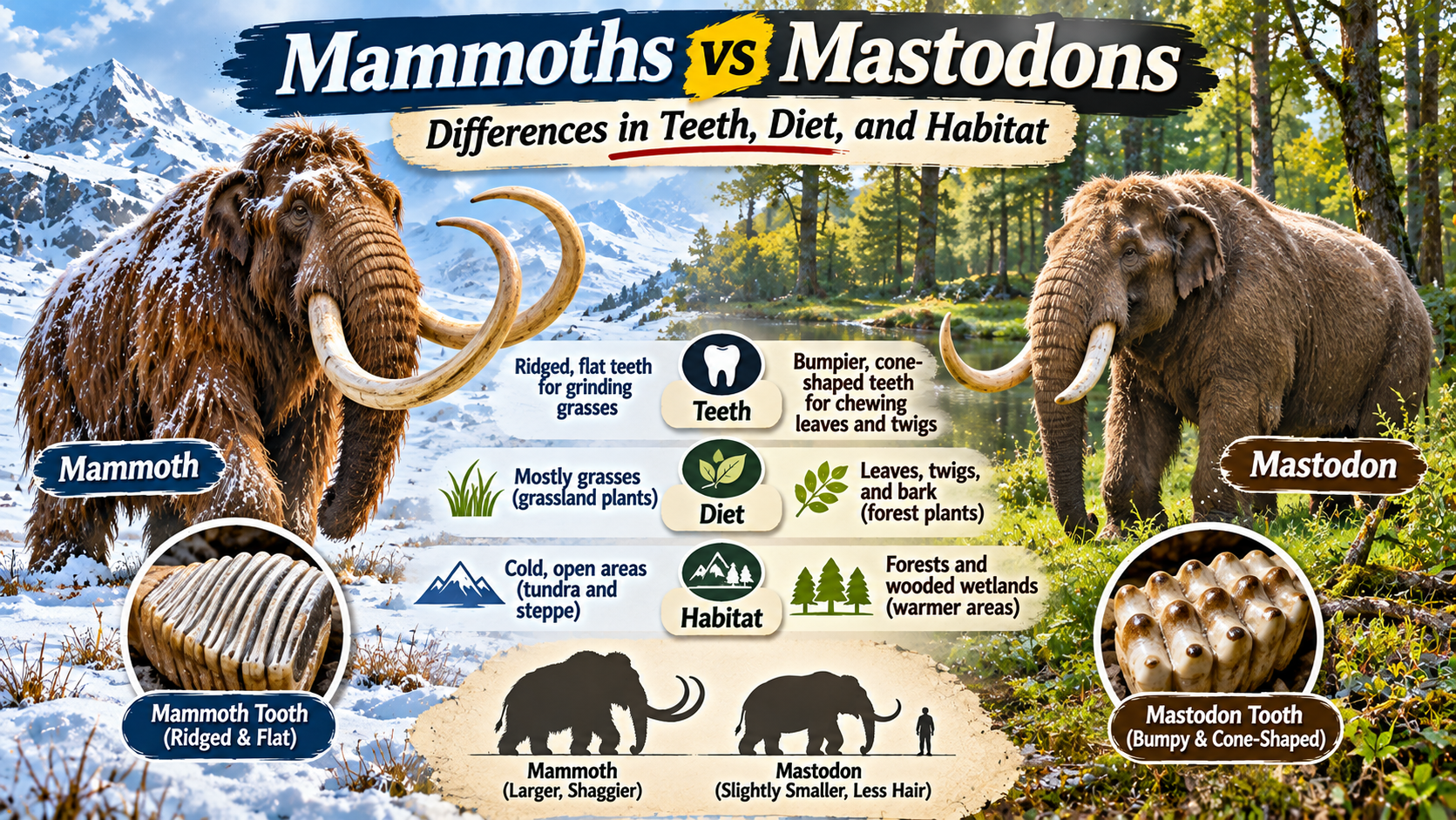
NATURAL HISTORY COLLECTION / EXHIBIT 004 Two Ice Age Giants. Two Very Different Ways of Life. Discover how mammoths and mastodons evolved different teeth, feeding strategies, and habitat preferences despite their similar elephant-like appearance. PREHISTORIC MAMMALS   /   PROBOSCIDEA   /   ICE AGE ECOSYSTEMS Imagine walking through North America during the last Ice … Read more
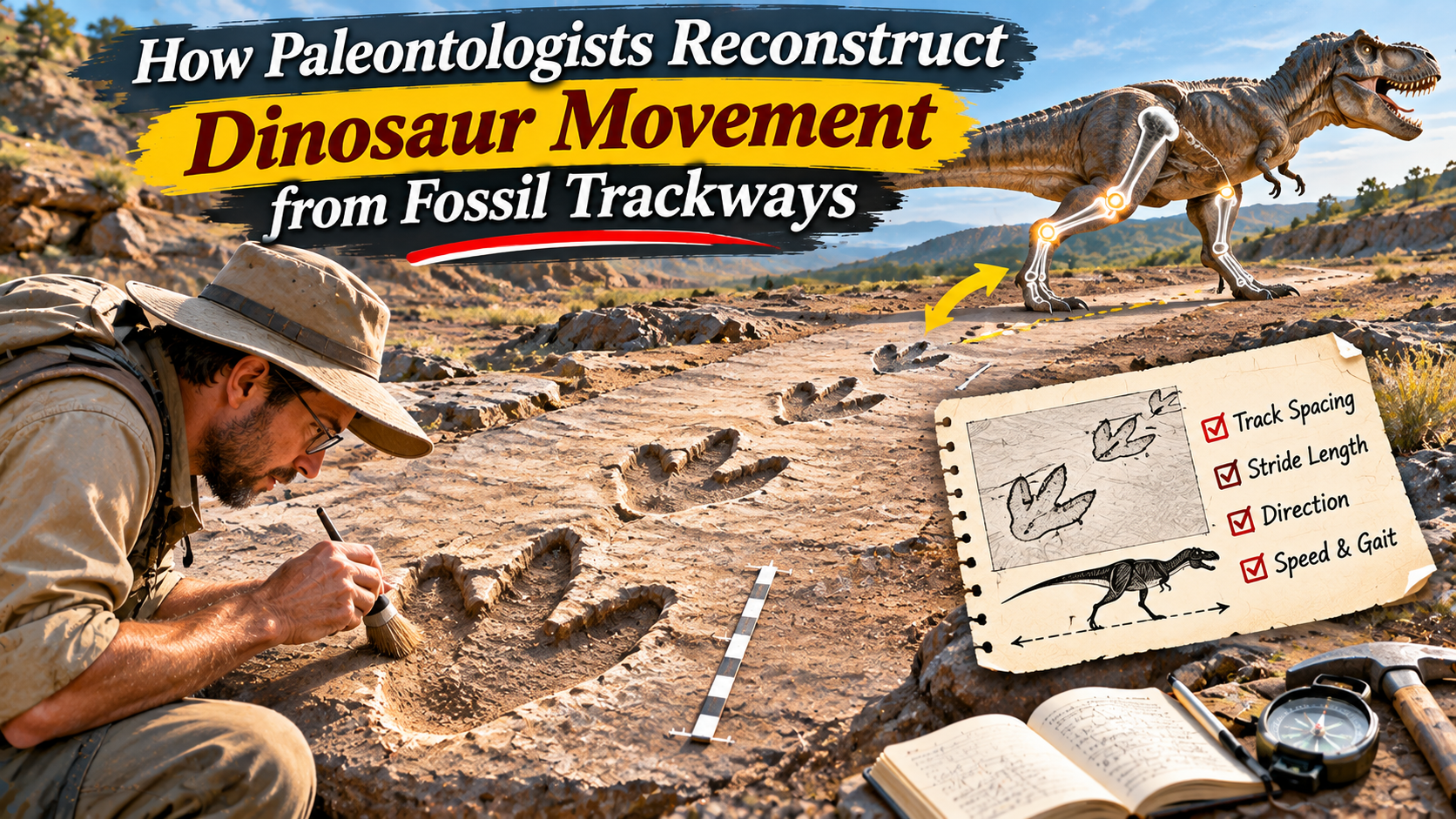
How Paleontologists Reconstruct Dinosaur Movement from Fossil Trackways

PALEONTOLOGY FIELD JOURNAL / FOSSIL EVIDENCE Ancient Footprints, Living Movements: Reading the Dinosaur Fossil Record A dinosaur’s bones reveal its anatomy. Its footprints can reveal how it actually moved across an ancient landscape. FIELD: VERTEBRATE ICHNOLOGY · EVIDENCE: FOSSIL TRACKWAYS · METHOD: BIOMECHANICAL ANALYSIS Millions of years after dinosaurs disappeared, their footprints continue to preserve … Read more

Paraceratherium: The Evolutionary Apex of Giant Hornless Rhinocerotoidea in Oligocene Eurasia

Following the catastrophic demise of non-avian dinosaurs 66 million years ago, terrestrial ecosystems were devoid of mega-herbivores. For tens of millions of years during the Paleocene and Eocene epochs, mammals gradually diversified from small, scurrying insectivores into medium-sized ungulates. However, by the Oligocene Epoch (approximately 34 to 23 million years ago), the evolutionary ceiling of … Read more

Megatherium and Giant Ground Sloths: The Pliocene-Pleistocene Titans of the Great American Biotic Interchange

In the modern zoological landscape, tree sloths are synonymous with sluggish, slow-motion arboreal existence — small folivores spending their entire lives suspended upside-down within the lush canopies of Central and South American rainforests. Yet throughout the Cenozoic Era, the evolutionary history of the Xenarthra told a dramatically different story: a lineage of colossal, elephant-sized terrestrial … Read more

The Woolly Mammoth (Mammuthus primigenius): Pleistocene Adaptations, Permafrost Mummies, and Megafaunal Overkill

No creature symbolizes the harsh, glaciated landscapes of the Pleistocene Epoch quite like the Woolly Mammoth (Mammuthus primigenius). Thriving across the vast, arid Mammoth Steppe that stretched uninterrupted from Ireland across Siberia and Beringia into North America, this iconic proboscidean was an extraordinary triumph of extreme cryogenic adaptation. Discovered not merely as fossilized bones, but … Read more

Smilodon and Saber-Toothed Felids: Hyper-Specialized Dentition, Jaw Biomechanics, and Extinction

Throughout the evolutionary history of mammalian carnivores during the Cenozoic Era, no predatory weapon evolved with such terrifying morphological recurrence as the elongated saber-tooth canine. Among all saber-toothed predators, none achieved the iconic status and physical mass of Smilodon — the saber-toothed cat that dominated North and South America during the Pleistocene Epoch (approximately 2.5 … Read more