Fossil Types Dinosaurs Prehistoric Mammals Fossil Formation Geological Eras About Us Contact Us
📘 SUBJECT ARCHIVE

Subject Guides

Explore structured study guides, course summaries, and learning resources.

The Dinosaur-Bird Transition: Archaeopteryx, Sinosauropteryx, and the Origin of Avian Feathers

In 1859, Charles Darwin published On the Origin of Species, outlining the theory of natural selection. In his text, Darwin candidly acknowledged one of the most formidable potential objections to his theory: the apparent lack of transitional “missing links” in the geological record connecting major biological classes. Barely two years later, in 1861, a quarry … Read more

Triceratops and Ceratopsian Evolution: Cranial Frills, Horn Morphometrics, and Defense Dynamics

Across the rich fossil beds of the Late Cretaceous Hell Creek and Lance Formations of western North America, one dinosaurian silhouette stands out as the ultimate paragon of evolutionary defense: Triceratops. With its massive three-horned skull, expansive solid bone neck frill, and compact nine-ton quadrupedal stance, Triceratops was the dominant herbivorous mega-dinosaur of the terminal … Read more

The Sauropod Gigantism Mystery: Respiratory Pneumaticity, High Browsing, and Metabolic Physiology

Among all organisms that ever walked on solid ground across Earth’s four-billion-year history, sauropod dinosaurs stand entirely alone in their sheer scale. While modern terrestrial mammals reach physical upper limits of 10 to 15 metric tons — represented by the extinct hornless rhino Paraceratherium and large African bull elephants — giant sauropods like Argentinosaurus, Patagotitan, … Read more

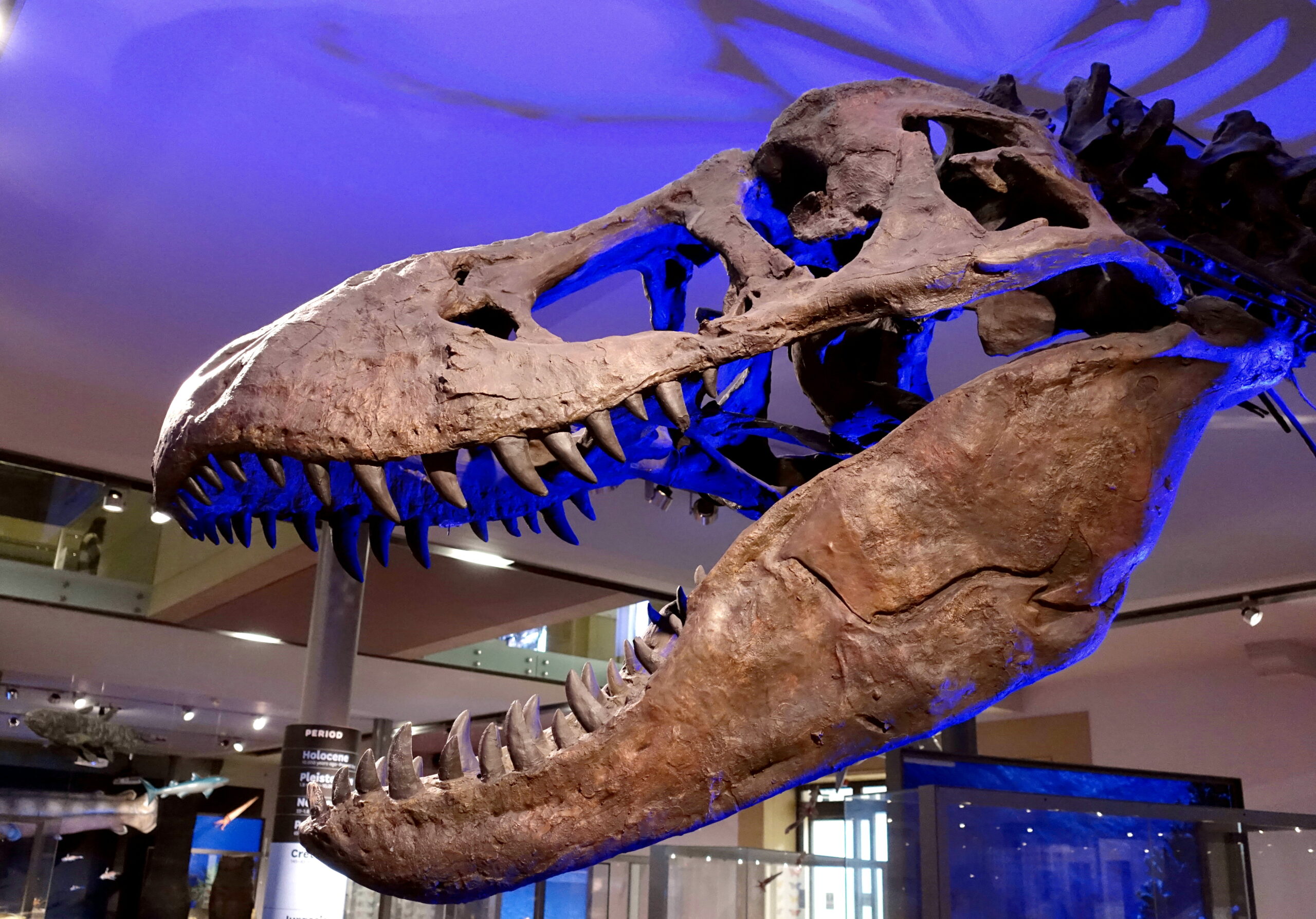
Tyrannosaurus rex: Biomechanical Anatomy, Bite Force Physics, and the Apex Predator Debate

No creature in the 3.8-billion-year chronology of terrestrial life captures the primeval power of the Mesozoic Era quite like Tyrannosaurus rex. Roaming the coastal plains and subtropical river valleys of western North America (Laramidia) during the terminal Cretaceous period (approximately 68 to 66 million years ago), this colossal theropod was among the largest terrestrial carnivores … Read more