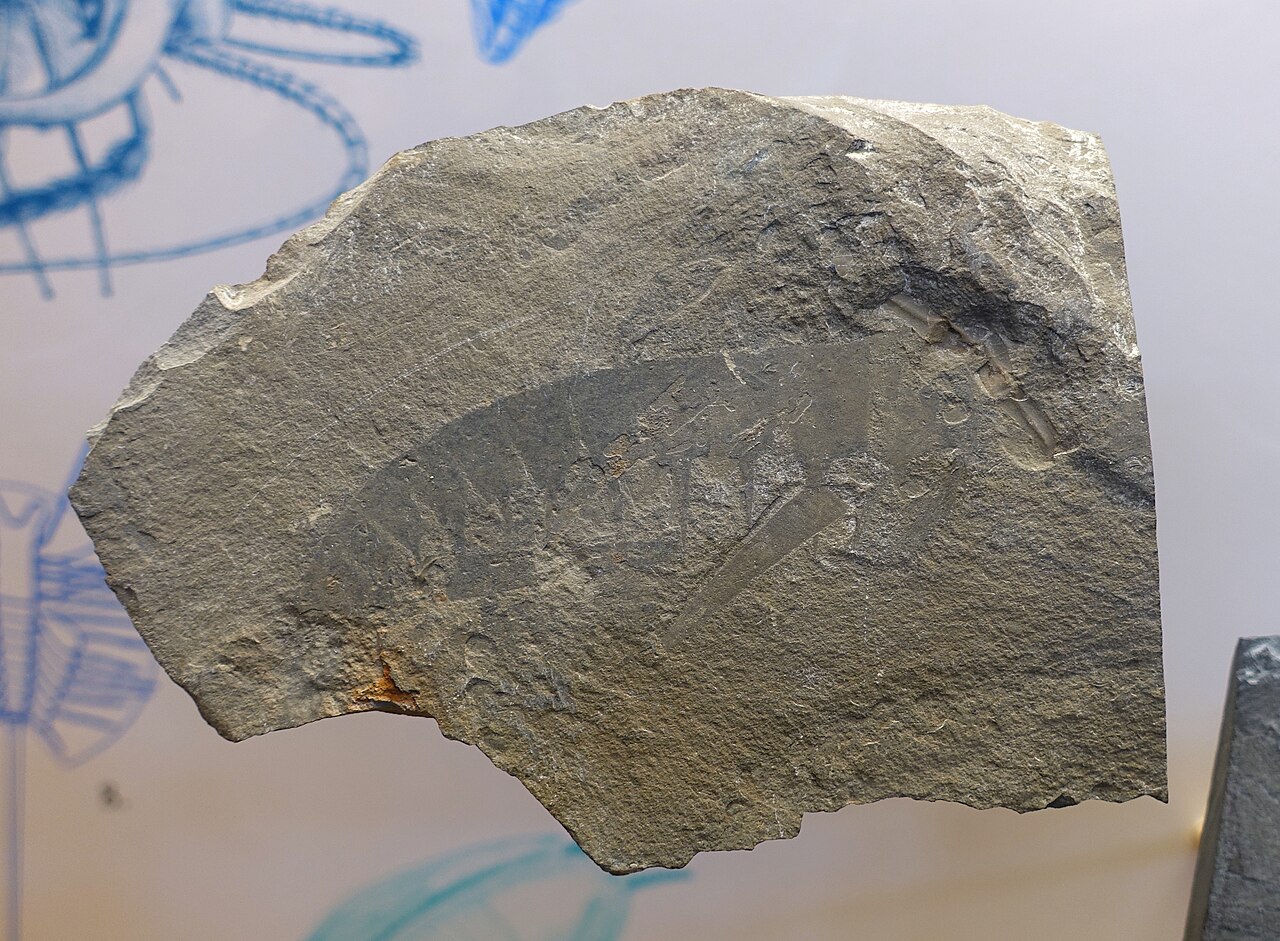
The standard fossil record is inherently biased toward organisms with durable biomineralized hard parts — bones, teeth, calcified shells, and lignified wood. For the overwhelming majority of biological history, soft-bodied organisms (which constitute over 90 percent of animal phyla) decay into nonexistence within hours or days of death, leaving no trace in conventional sandstone or limestone strata. However, in extraordinary geological moments, a rare conjunction of rapid burial, total chemical anoxia, and rapid mineral precipitation halts the machinery of decay, preserving delicate soft tissues, internal organs, eyes, and cuticles down to cellular resolutions. These exceptional paleontological treasure troves are known to science by the German geological term: Lagerstätten.
Executive Takeaway: Nature’s High-Fidelity Archives
Lagerstätten (German for ‘storage places’) are divided into Konzentrat-Lagerstätten (colossal concentrations of disarticulated bonebeds/shell beds) and Konservat-Lagerstätten (sites of exceptional morphological preservation of soft tissues). Historic localities like the Middle Cambrian Burgess Shale of Canada, the Upper Jurassic Solnhofen Limestone of Germany, and the Cretaceous Jehol Biota of China have redefined evolutionary biology by revealing the lost soft-bodied worlds of deep time.
The Anatomy of a Miracle: How Konservat-Lagerstätten Form
The creation of a Konservat-Lagerstätte requires the near-total suppression of the normal agents of taphonomic destruction: microbial decay, biological scavengers, physical wave currents, and bioturbating sediment burrowers. Geologists categorize the primary taphonomic pathways into four distinct preservation models:
| Lagerstätte Locality | Geological Age | Sedimentary Matrix | Exceptional Taphonomic Features |
|---|---|---|---|
| Burgess Shale (British Columbia, Canada) | Middle Cambrian (~508 Ma) | Deep marine aluminosilicate mudstone | Non-mineralized appendages, gut tracts, eyes (Opabinia, Anomalocaris, Hallucigenia) |
| Hunsrück Slate (Rhineland, Germany) | Early Devonian (~405 Ma) | Pyritized marine roofing slates | Soft walking legs, gills, and vascular canals replaced in glistening pyrite |
| Solnhofen Limestone (Bavaria, Germany) | Late Jurassic (~150 Ma) | Hypersaline, stagnant lagoon lithographic lime mud | Archaeopteryx feathers, pterosaur wing membranes, delicate dragonfly venation |
| Jehol Biota (Liaoning, China) | Early Cretaceous (~125 Ma) | Lacustrine shales intercalated with volcanic ash | Feathered theropods (Sinosauropteryx, Microraptor), mammalian hair pelts, floral organs |
The Burgess Shale: Unveiling the Cambrian Explosion
In 1909, American paleontologist Charles Doolittle Walcott was exploring the high alpine passes of Yoho National Park in the Canadian Rockies. Splitting a block of dark shale along a ridge between Mount Field and Wapta Peak, Walcott made a discovery that transformed the study of early animal evolution: the Burgess Shale.
Dating to the Middle Cambrian (approximately 508 million years ago), the Burgess Shale preserves the aftermath of the Cambrian Explosion. Ancient marine organisms living on oxygenated shallow-water carbonate reefs were caught in submarine mud avalanches (turbidity currents), swept down a steep submarine cliff (the Cathedral Escarpment), and buried deep within anoxic, toxic basin muds. Because the deep mud was completely devoid of oxygen, scavenging benthic animals could not survive to consume the carcasses, and anaerobic decay was so slow that clay minerals absorbed directly onto organic membranes, stabilizing gut tracts, gills, and delicate legs as thin aluminosilicate mineral films.
Weird Wonders: Anomalocaris, Hallucigenia, and Opabinia
When paleontologists Harry Whittington, Derek Briggs, and Simon Conway Morris re-examined the Burgess fossils in the 1970s, they uncovered an alien menagerie of body plans:
- Anomalocaris canadensis: A three-foot-long apex predator equipped with compound stalked eyes, spiny grasping appendages, and a circular, radial mouth of plates — the world’s first great marine macropredator.
- Opabinia regalis: A creature possessing five functional eyes on stalks and a long, flexible frontal nozzle or proboscis tipped with a grasping claw.
- Hallucigenia sparsa: A caterpillar-like lobopodian that walked on seven pairs of rigid, pointed stilt spines with delicate dorsal tentacles, originally reconstructed upside-down and backward by confused early researchers.
- Pikaia gracilens: A slender, ribbon-like animal preserving a distinct dorsal notochord — one of the earliest known stem-chordates and the direct evolutionary ancestor of all vertebrate life, including humans.
The Solnhofen Limestone: The Jurassic Lagoon
In Bavaria, Germany, Upper Jurassic limestone deposits have been quarried for centuries to produce ultra-fine, smooth lithographic printing plates. In the 1850s, workers discovered that these fine-grained micritic lime muds preserved an extraordinary Konservat-Lagerstätte: the Solnhofen Plattenkalk.
During the Tithonian stage (~150 million years ago), the region was a stagnant archipelagic lagoon system separated from the open Tethys Ocean by barrier reefs. The warm, shallow lagoons suffered from intense evaporation, creating hypersaline, dense bottom waters that were completely lethal to living creatures and anaerobic bacteria alike. Any animal that fell into the lagoon — whether blown in by coastal storms or drowning — settled onto a pristine, untouched microbial mat on the lagoon floor.
Preserving the Fragile Wings of Pterosaurs and Archaeopteryx
Because there was zero bioturbation (no burrowing worms or crabs) to disturb the sediment, the Solnhofen mud captured details of breathtaking delicacy. All twelve known skeletal specimens of Archaeopteryx were recovered from Solnhofen quarries, preserving individual feather barbules and flight wing impressions with photographic clarity. Pterosaurs like Rhamphorhynchus were fossilized with their soft, fibrous wing patagium membranes, throat pouches, and tail vane rudders preserved intact.
Konzentrat-Lagerstätten: The Monuments of Mass Accumulation
While Konservat-Lagerstätten are prized for tissue quality, Konzentrat-Lagerstätten are celebrated for sheer quantitative volume. These are catastrophic bonebeds, shell pavements, and accumulation traps where biological or physical currents concentrated thousands or millions of fossilized elements into dense bone layers:
- Dinosaur Monospecific Bonebeds: In the Dinosaur Park Formation of Alberta and the Two Medicine Formation of Montana, flash floods drowned massive migrating herds of thousands of ceratopsians (Centrosaurus) and hadrosaurs, leaving bonebeds hundreds of meters long packed solid with articulated and disarticulated skeletons.
- Shark Tooth Coquinas: Miocene marine deposits (such as the Bone Valley Formation in Florida) where ocean currents systematically winnowed fine sediments away, concentrating millions of Otodus megalodon and prehistoric shark teeth into commercial phosphate beds.
Conclusion: The Windows that Rewrite Evolution
Without Lagerstätten, paleontology would be an impoverished science, restricted to imagining how bones and shells operated in a biological vacuum. Konservat-Lagerstätten are evolutionary time portals. They prove that the history of life was infinitely richer, more fragile, and more wonderfully bizarre than conventional rocks could ever convey — preserving the eyes, feathers, and soft flesh of creatures that lived and died in ancient worlds hundreds of millions of years ago.