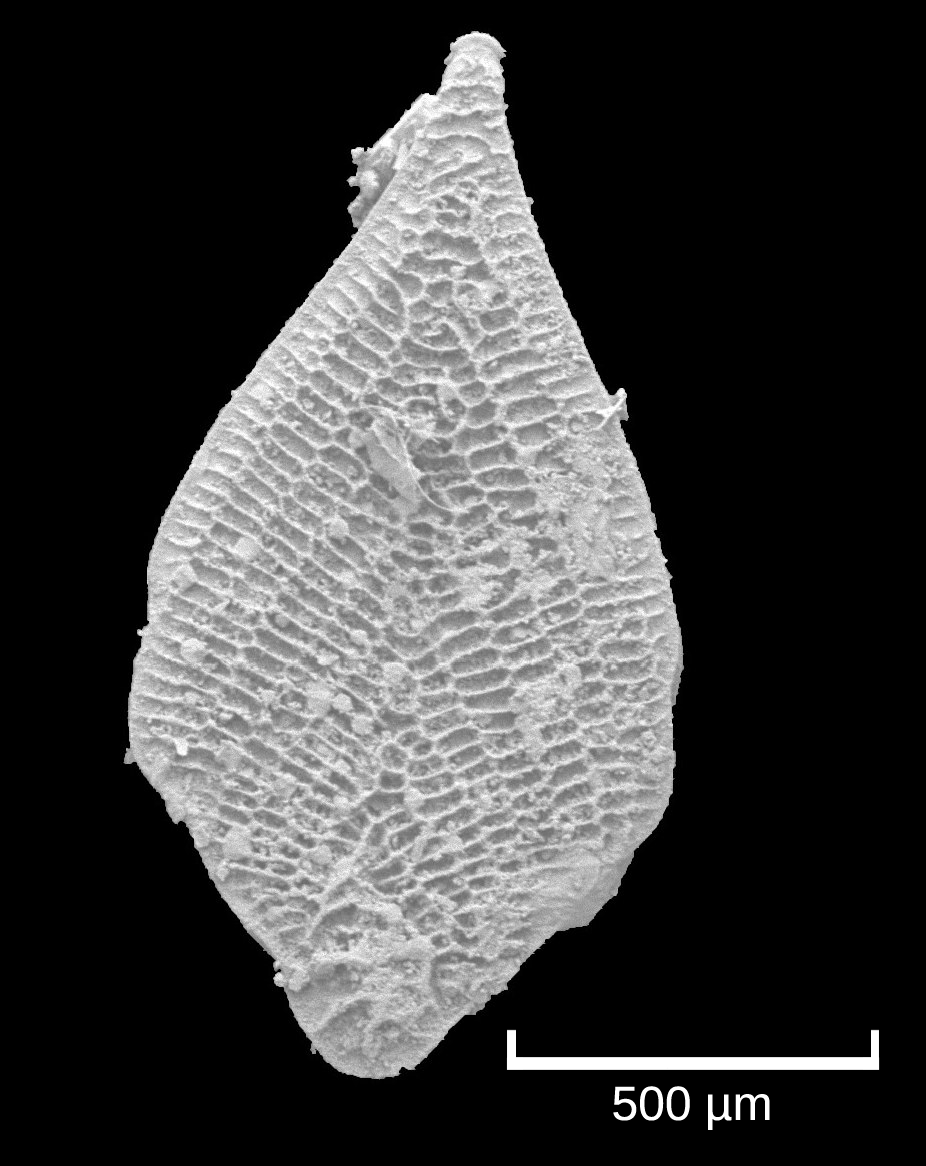
When the public envisions paleontology, grandiose images of fossilized dinosaur femurs, sabertooth skulls, and mammoth tusks dominate the cultural landscape. Yet in the scientific trenches of evolutionary biology, oceanography, petroleum exploration, and paleoclimatology, the most transformative fossils on Earth are so microscopic that thousands can rest comfortably on the head of a pin. These are microfossils — the biomineralized shells, tests, and frustules of microscopic single-celled organisms, algae, and micro-invertebrates. Among them, foraminifera, radiolarians, and diatoms serve as the ultimate chronological and environmental barometers of our planet, recording the temperature, chemical composition, and ecological upheavals of oceans across hundreds of millions of years.
Executive Takeaway: The Microscopic Titans of Deep Time
Microfossils (predominantly foraminifera, radiolarians, and diatoms) are the most abundant and continuous fossil records on Earth. By locking oceanic oxygen and carbon isotopes into their mineral tests, they act as high-resolution paleoclimatic clocks, tracking global ice volumes, oceanic acidification, and mass extinctions from the Paleozoic to the present day.
The Triad of Marine Microfossils
The vast oceanic microfossil record is anchored by three prominent biological groups, each utilizing distinct biochemical strategies to construct protective mineral shells:
1. Foraminifera (Calcium Carbonate Calcite Tests)
Foraminifera (commonly called “forams”) are single-celled amoeboid protists equipped with fine, branching pseudopodia (reticulopodia). Originating in the Cambrian, they construct chambered shells known as tests, predominantly utilizing calcium carbonate (calcite or aragonite) sequestered from seawater. Forams are divided into benthic forms (dwelling on or within seafloor sediments) and planktic forms (floating freely in the upper photic water column). Their chamber arrangements — uniserial, biserial, trochospiral, and planispiral — exhibit rapid evolutionary turnover, making them premier index fossils for dating sedimentary strata.
2. Radiolarians (Biogenic Silica Skeletons)
Radiolarians are marine zooplankton protists that produce intricate, ornate internal skeletons composed of amorphous biogenic opal-A silica (SiO2 · nH2O). Boasting delicate geometric lattice spheres, spines, and concentric perforated polyhedra, radiolarians thrive in open-ocean waters from the polar zones to the tropics. Because silica does not dissolve under extreme hydrostatic pressure, radiolarian skeletons survive far below the Carbonate Compensation Depth (CCD), accumulating on abyssal seafloors as vast deposits of siliceous radiolarian ooze that lithify into bedded chert.
3. Diatoms (Siliceous Frustules)
Diatoms are photosynthetic microalgae that appeared in the early Mesozoic and exploded in diversity during the Cenozoic. They construct rigid, glass-like cell walls termed frustules, comprised of two overlapping halves (valves) fitting together like a pillbox or petri dish. Diatoms account for roughly 20 percent of Earth’s total photosynthesis. Their massive blooms and subsequent sedimentation generate thick geological formations of diatomite (diatomaceous earth), utilized extensively in industry for filtration and thermal insulation.
| Microfossil Group | Mineral Shell Composition | Ecological Niche | Geological Range | Primary Scientific Utility |
|---|---|---|---|---|
| Planktic Foraminifera | Calcite (CaCO3) | Pelagic / Upper Water Column | Early Jurassic to Recent | δ¹&sup8;O Paleotemperature, Biostratigraphy, Extinction Markers |
| Benthic Foraminifera | Calcite or Agglutinated Sand | Deep Seafloor Benthos | Early Cambrian to Recent | Paleobathymetry, Bottom-Water Ocean Chemistry, Deep Anoxia |
| Radiolaria | Opaline Silica (SiO2 · nH2O) | Open Pelagic / Abyssal Waters | Cambrian to Recent | Deep-Water Chert Dating, Oceanic Current Upwelling Tracking |
| Diatoms | Hydrated Silica (Frustules) | Marine & Freshwater Photics | Early Jurassic to Recent | Lacustrine Paleolimnology, Polar Sea-Ice Extent, Nutrient Flux |
Oxygen Isotope Stratigraphy: The δ¹&sup8;O Climate Thermometer
The most profound scientific breakthrough enabled by foraminiferal microfossils is stable isotope geochemistry. When a planktic or benthic foraminifer constructs its calcium carbonate test (CaCO3), it incorporates oxygen atoms directly from the ambient seawater. In nature, oxygen exists as two stable isotopes: light oxygen-16 (¹&sup6;O) and heavy oxygen-18 (¹&sup8;O).
Because water molecules containing light oxygen (¹&sup6;O) evaporate more readily than heavier molecules (¹&sup8;O), water vapor rising from tropical oceans is enriched in ¹&sup6;O. During warm greenhouse climates, this ¹&sup6;O-rich precipitation falls across continents and flows back into the oceans via rivers, maintaining a stable isotopic ratio. However, during global ice ages (such as the Pleistocene glacial maximums), vast amounts of ¹&sup6;O water vapor become locked up in colossal continental ice sheets across North America and Eurasia. Consequently, the global ocean becomes systematically enriched in heavy oxygen (¹&sup8;O).
Reading Deep-Sea Sediment Cores
By extracting benthic foraminifera (such as Cibicidoides) from continuous deep-sea sediment cores retrieved by the International Ocean Discovery Program (IODP), geochemists measure the ratio of ¹&sup8;O to ¹&sup6;O (expressed as δ¹&sup8;O) using mass spectrometers. This provides an unbroken, high-resolution global temperature and ice-volume curve spanning over 66 million years — proving the existence of the Paleocene-Eocene Thermal Maximum (PETM), the abrupt cooling of the Eocene-Oligocene glaciation, and the cyclic Milankovitch orbital rhythms of Pleistocene Ice Ages.
Biostratigraphy and the Petroleum Frontier
Beyond paleoclimatology, microfossils are the indispensable workhorses of applied economic geology. In commercial petroleum and natural gas drilling, extracting intact macrofossils (like complete ammonites or bones) from narrow drill bores is virtually impossible; rotary drill bits crush rock cores into millimeter-sized fragments.
Microfossils, however, survive rotary drilling intact. A single handful of drill well cuttings can contain thousands of complete foraminiferal tests and radiolarian skeletons. Because microfossil species evolved and went extinct at known, rigorously calibrated geological intervals, biostratigraphers on drilling rigs identify the exact geological formation, epoch, and structural fault depth in real time, preventing drilling blowouts and targeting hydrocarbon-bearing porous sandstone strata with pinpoint accuracy.
Tracking Mass Extinctions: The K-Pg Boundary Micro-Spike
Microfossils provide the most dramatic, unassailable evidence for catastrophic extinction events in Earth history. Across the Cretaceous-Paleogene (K-Pg) boundary (66 million years ago), when a six-mile-wide asteroid struck the Yucatán Peninsula, the microfossil record underwent an apocalyptic collapse.
In marine sediment cores from Italy, Spain, and ocean basins worldwide, Cretaceous strata below the boundary layer are teeming with diverse, ornamented, tropical planktic foraminifera (such as the giant genus Globotruncana). Immediately above the millimeter-thin iridium-rich asteroid fallout clay layer, virtually all large tropical species vanish completely — over 90 percent of planktic foram species were wiped out in a geological heartbeat. In their place, the surviving strata are populated exclusively by minuscule, opportunistic “disaster taxa” like Guembelitria cretacea, documenting the catastrophic devastation and slow, million-year recovery of the ocean’s biological pump.
Conclusion: The Microscopic Keepers of Planetary Memory
Microfossils illustrate that in paleontology, scientific importance is not determined by physical stature. While colossal dinosaurs captured the public imagination, microscopic foraminifera, radiolarians, and diatoms built entire mountain ranges of chalk and chert, powered the global carbon cycle, and preserved the definitive isotopic diary of Earth’s climate history. They remain our most reliable scientific guideposts as we seek to understand past planetary changes and navigate our climatic future.