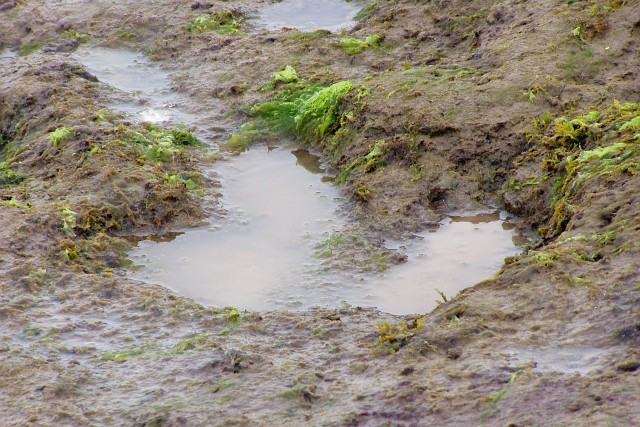
In the vast expanse of earth’s geological record, the history of ancient life is preserved through two fundamentally distinct taphonomic categories: body fossils and trace fossils. While the public imagination frequently gravitates toward towering dinosaur skeletons, gleaming ammonite shells, and petrified bones, the behavioral footprint of ancient ecosystems is recorded with equal scientific power through ichnological evidence. Body fossils document the anatomical architecture of an organism — what a creature was — while trace fossils (ichnofossils) chronicle its biological activities, locomotive kinematics, feeding habits, and environmental interactions — what a creature did. Understanding the intricate differences between these two fossilization modes is foundational to modern paleobiology, paleoecology, and evolutionary stratigraphy.
Executive Takeaway: The Duality of Paleontological Evidence
Body fossils preserve the physical remains or chemical replicas of an organism’s anatomical structure (bones, teeth, shells, lignified wood, and soft tissues). In contrast, trace fossils (ichnofossils) record biological activity within sedimentary substrates (tracks, burrows, coprolites, gastroliths, and bite marks) without preserving physical anatomical tissue. Together, they provide an interconnected picture of morphology and behavior across deep geological time.
The Anatomy of Preservation: Defining Body Fossils
Body fossils represent the direct or mineralogically altered physical remains of an organism’s biological structure. The vast majority of body fossils are derived from “hard parts” — biomineralized tissues containing calcium carbonate (calcite or aragonite in mollusk shells and corals), calcium phosphate (hydroxyapatite in vertebrate bones and teeth), or silica (in hexactinellid sponges and radiolarian skeletons). Because these mineral matrices possess inherent structural durability, they resist physical destruction, enzymatic decay, and microbial scavenging far longer than volatile soft tissues like organs, musculature, and integument.
When an organism dies, its hard parts undergo a continuum of taphonomic processes including necrolysis (tissue decay), disarticulation (separation of skeletal elements), bioerosion, abrasion, and eventual burial in clastic sediment. Over millions of years, percolating groundwaters carrying dissolved mineral solutes (such as silica, calcite, or pyrite) penetrate the pore spaces of bone or shell. Through permineralization, these minerals crystallize within empty cellular voids, creating a dense, heavy rock replica that preserves the microscopic osteological architecture of ancient vertebrates.
| Comparative Characteristic | Body Fossils (Somatofossils) | Trace Fossils (Ichnofossils) |
|---|---|---|
| Primary Object of Preservation | Anatomical structures (bones, teeth, shells, leaves) | Dynamic behavioral records (footprints, burrows, borings) |
| Primary Scientific Discipline | Systematic Paleontology & Comparative Morphology | Ichnology & Paleoenvironmental Reconstruction |
| Post-Mortem Transport Susceptibility | High; carcasses are transported by rivers, tides, and scavengers | Zero; footprints and burrows must be preserved in situ |
| Taxonomic Specificity | Often precise (species-level diagnosis via skeletal markers) | Categorized into form-genera (ichnotaxa); single track can be made by multiple species |
| Key Biological Insights | Size, sexual dimorphism, phylogeny, biomechanical morphology | Locomotive velocity, herd dynamics, feeding strategies, substrate rheology |
| Common Geological Matrices | Sedimentary rocks, marine shales, amber, asphalt seeps | Sandstones, siltstones, paleosols, carbonate mudstones |
Ichnology: Reading the Dynamics of Ancient Behavior
While a body fossil reveals what an animal looked like, it cannot definitively tell scientists how fast it ran, whether it traveled in coordinated social packs, or how deep it tunneled into seafloor mud to evade predators. This is the domain of Ichnology — the study of trace fossils. Trace fossils possess an extraordinary scientific advantage over body fossils: they cannot be transported after their creation. A dinosaur bone found in a river channel sandstone might have been washed miles downstream from where the animal died, but a sequence of dinosaur footprints (a trackway) exists exactly where the living animal took its steps.
Ichnologists categorize trace fossils into ethological behavioral groups:
- Repichnia (Locomotive Traces): Trackways and footprints produced during walking, running, or crawling. By measuring stride length, footfall angles, and footprint depths, biomechanists calculate precise dinosaur locomotive speeds using Alexander’s dynamic similarity formulas.
- Fodichnia & Pascichnia (Feeding and Foraging Traces): Intricate horizontal mining burrows created by worms, crustaceans, and marine invertebrates systematically harvesting nutrient-rich organic detritus from seafloor sediments.
- Domichnia (Dwelling Traces): Semi-permanent or permanent burrows (such as Ophiomorpha and Skolithos) excavated for protection, nursery care, and microclimate regulation.
- Coprolites & Gastroliths: Fossilized feces and gizzard stones that provide direct empirical evidence of prehistoric diets, trophic food webs, and internal digestive mechanics.
Taphonomic Filters and Environmental Bias
The fossil record is not an egalitarian democracy; it is an intensely biased taphonomic filter. The likelihood of an organism becoming fossilized — either as a body or trace specimen — depends overwhelmingly on the environment in which it lived and died. Marine benthic basins, deltaic floodplains, and shallow lacustrine settings characterized by rapid sediment accumulation rates possess exceptionally high preservation potentials. Conversely, terrestrial upland forests, mountainous plateaus, and desert dunes feature active weathering, erosion, and scavengers that utterly destroy biological remains before burial can occur.
Furthermore, fragile soft-bodied organisms (jellyfish, annelid worms, nematodes) constitute roughly 90 percent of living biodiversity in any given ecosystem, yet they represent less than one percent of standard fossil assemblages. Only in extraordinary circumstances known as Konservat-Lagerstätten — such as the Middle Cambrian Burgess Shale of Canada or the Upper Jurassic Solnhofen Limestone of Germany — do exceptional anoxic conditions prevent bacterial decomposition and preserve delicate cellular soft tissues in fine-grained sedimentary rock.
The Science of Ichnotaxonomy
Because multiple different animals can produce identical footprints in similar mud, trace fossils cannot be categorized using the standard biological species classification. An elephant and a mammoth would produce near-identical circular foot impressions in sandy loam. Therefore, ichnologists utilize a parallel naming system known as ichnotaxa. For example, Grallator refers to a three-toed theropod trackway, whether made by a small coelophysid in the Triassic or a juvenile megalosaurid in the Early Jurassic.
Paleoecological Synthesis: Bringing Bones and Tracks Together
The definitive triumph of modern paleontology emerges when body fossils and trace fossils are integrated into a single cohesive paleoecological reconstruction. A famous example is observed in the Early Cretaceous Glen Rose Formation of the Paluxy River in Texas. There, extensive sauropod trackways (Brontopodus) and large carnivorous theropod trackways (Eubrontes) cross a broad tidal flat. Analysis of the track geometry, inter-digital spacing, and relative step frequency revealed that a predatory theropod was actively stalking a herd of giant long-necked sauropods across a coastal marsh — a dynamic snapshot of Cretaceous life that skeletal bones alone could never reveal.
Similarly, the study of dinosaur nesting grounds — combining fossilized egg clutches (body fossils) with nest scrapes, brooding postures, and juvenile trampling footprints (trace fossils) — fundamentally disproved the outdated Victorian view of dinosaurs as sluggish, neglectful reptilian brutes. Instead, the convergence of somatofossil and ichnofossil data proved that many dinosaurs engaged in active parental investment, complex social flocking, and high-energy nesting strategies identical to modern birds.
Conclusion: The Dual Archives of Prehistoric Life
Body fossils provide the osteological blueprint, evolutionary phylogeny, and physical anatomy of extinct organisms; trace fossils provide the kinetic theater, ecological drama, and environmental substrate interactions of living animals. Both are indispensable pillars of paleobiological inquiry. By reading the bone and the footprint in tandem, paleontologists unlock the living truths of ancient worlds, reconstructing millions of years of evolutionary experimentation across the sedimentary pages of the Earth.